
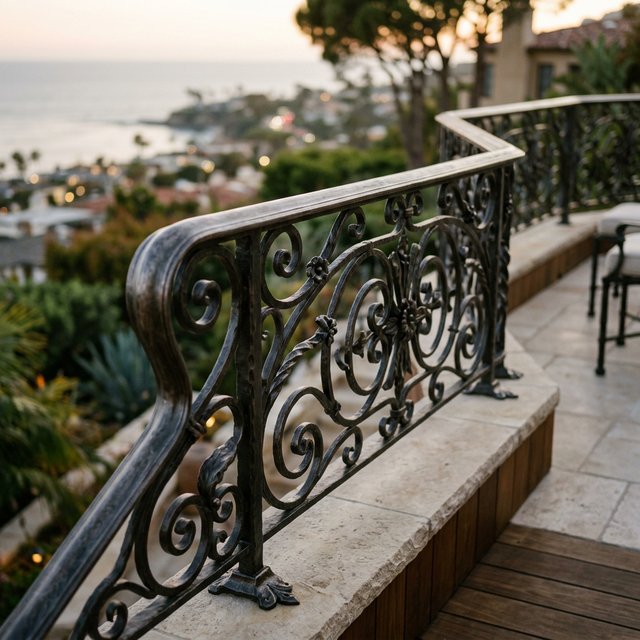
Surviving New England Winters: The Railing Challenge
Designing or upgrading an exterior railing system in the Boston area requires careful planning. Our local climate subjects outdoor metal to extreme temperature swings: freezing ice storms in January, dense humidity in July, and the corrosive salt-laden sea air blowing in from Boston Harbor. Choosing the wrong metal or coating will lead to staining rust and structural weakness within just a couple of seasons.
Material Breakdown: Wrought Iron vs. Steel vs. Aluminum
1. Custom Wrought Iron: Traditionally the first choice for historic Boston neighborhoods (like Back Bay and Beacon Hill), custom wrought iron offers unmatched structural weight, architectural elegance, and design flexibility. When properly pre-treated with zinc-rich primers and powder-coated, wrought iron rails will easily last over 50 years.
2. Structural Steel: Standard carbon steel provides massive structural loading capabilities, ideal for commercial ADA handrails and high-traffic egress stairs. Steel is highly cost-effective but requires regular maintenance or high-performance hot-dip galvanization to shield it from heavy snows and road salts.
3. Aluminum: Highly resistant to corrosion and exceptionally lightweight, aluminum is a solid choice for modern balconies. However, it lacks the hand-forged aesthetic detailing and the solid structural impact resistance that wrought iron and steel offer.
The Power of Powder Coating & Galvanization
The secret to railing longevity in Boston is the protective finish. We recommend a two-layer system: sandblasting the raw metal, applying a zinc-rich rust-blocking epoxy primer, and sealing it with an electrostatic polyester powder coat baked in our industrial oven. This creates an impermeable shell against moisture and winter de-icing chemicals.