
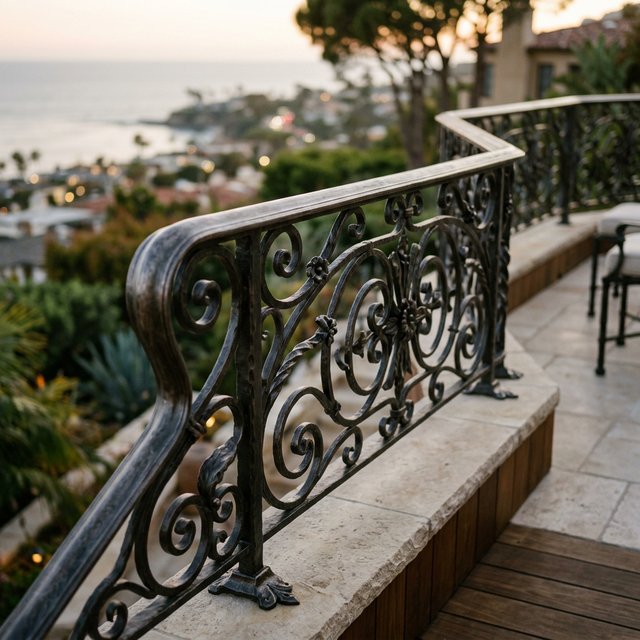
Wrought Iron vs. Aluminum: The Homeowner's Dilemma
When selecting a new railing system for your front steps, deck, or balcony, the material you choose plays a huge role in your property's security, aesthetics, and long-term maintenance costs. The two most popular premium exterior options are custom-forged wrought iron and fabricated aluminum. Understanding their key differences will help you make an informed decision for your estate.
1. Structural Strength & Guardrail Security
Wrought iron and carbon steel are virtually unmatched in pure structural strength. A solid, welded iron railing will not flex, sag, or bend even under extreme lateral impact, providing a heavy, unyielding barrier for high porches and balconies. Aluminum, while stiff, is far lighter and can bend or dent under heavy blows or severe pressure.
2. Aesthetic Craftsmanship & Design Flex
Wrought iron is the king of architectural design. Because our blacksmiths hand-forge each piece in our shop, we can create incredibly intricate gothic designs, custom scrolls, twisted pickets, and personalized monograms. Aluminum railings are typically assembled from pre-fabricated, extruded panels, which limits design customization to standard, modern vertical pickets.
3. Maintenance and Lifetime Value
Aluminum is naturally resistant to rust, making it a very low-maintenance material. However, modern wrought iron that is sandblasted, hot-dip galvanized, or sealed with baked-on electrostatic powder coat achieves incredibly high rust resistance, matching aluminum's longevity while retaining the unmatched premium weight, value, and prestige of hand-forged steel. An iron railing adds permanent luxury value that raises a property's curb appeal for generations.